The right training.
For the right truck.
Practical lift truck training for new and experienced operators, delivered across the UK.
Training that fits the job.
Lift trucks vary. Workplaces vary. Operator experience varies too. That’s why we start with what your people actually need to do. We match the training to the operator, the truck and the working environment, building the practical ability, knowledge and judgement needed to operate safely and competently.
1
Select the level.
Whether someone is getting behind the controls for the first time or building on existing experience, we make sure they receive the right level of training.
2
Select the accreditation.
We offer training through the highest recognised workplace transport accreditation routes, including:
3
Select the truck.
We deliver training across the major lift truck categories used throughout warehousing, logistics, manufacturing and distribution.
-
Compact equipment designed for moving, lifting and stacking palletised loads.
The A category includes pedestrian and rider-operated pallet trucks, stackers, straddle trucks and other low-level handling equipment. Training develops safe movement, load control and confident operation around people and workplace obstacles.
-
Versatile trucks used across warehouses, yards and industrial environments.
Counterbalance trucks are designed to lift and transport loads without a reach mechanism or supporting legs. The category covers a range of capacities and configurations, from standard forklifts through to heavy-duty equipment.
Training focuses on manoeuvring, stability, load handling, stacking and safe operation in active working areas.
-
Designed for long, heavy and awkward loads.
Sideloaders are particularly suited to materials such as timber, steel and pipework, allowing loads to be carried along the length of the truck.
Training develops controlled manoeuvring, load stability and safe handling across different truck capacities.
-
High-level handling in compact spaces.
Reach trucks are widely used in warehousing and distribution where storage height and aisle width matter.
Training covers accurate positioning, stacking and de-stacking, stability and controlled operation at height. The category includes reach trucks across different lift heights and operating configurations.
-
Designed to make picking at height safer and more efficient.
Order pickers allow operators to access goods directly from storage locations and are commonly used in warehousing, retail and distribution.
Training covers safe travel, positioning, stability and controlled operation at medium and high picking levels.
-
High-density storage demands precision.
VNA trucks are built to work in exceptionally narrow aisles while maintaining high-level stacking capability.
Training develops accurate navigation, load positioning and safe high-level operation across both operator-up and operator-down configurations.
-
Made for loads that don’t move easily.
Multi-directional trucks can travel in several directions, making them particularly effective when handling long, bulky or awkward materials in restricted areas.
The category includes multi-directional counterbalance, sideloader and reach configurations.
Training focuses on manoeuvrability, load control and making safe use of the truck’s specialist capabilities.
-
High lift. Tight turns.
Pivot steer trucks use an articulated design to combine high-level stacking with exceptional manoeuvrability in narrow aisles.
Training develops precise steering, positioning, load stability and safe use of the truck’s articulation.
-
Handling capability that travels with you.
Vehicle-mounted lift trucks are carried on the delivery vehicle, allowing operators to load and unload where fixed handling equipment may not be available.
Training covers deployment, stability, load handling, safe operation and securing the truck back onto the carrying vehicle. The ABA classification identifies these within the T group.
-
More than just forks.
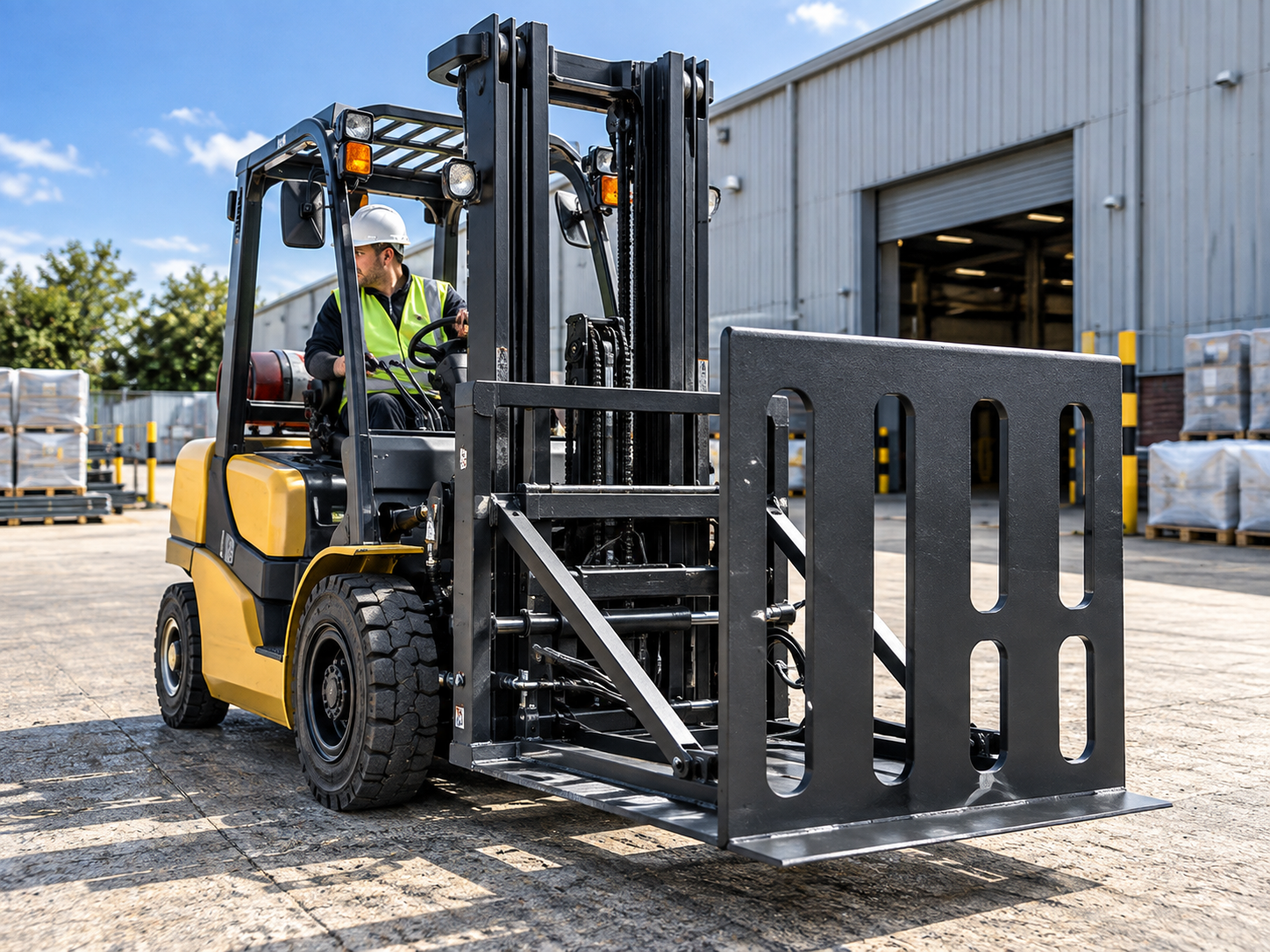
Attachments can significantly change how a lift truck handles a load.
We provide training across a wide range of attachment types, helping operators understand how the attachment affects capacity, stability and safe operation.
Options include grabs, clamps, booms, buckets, fork extensions, rotating forks, lifting frames, platforms, spreader bars, vacuum lifters and more. The current TRG catalogue includes a broad attachment range and allows attachment training to be incorporated into lift-truck courses.
Training on the equipment they use
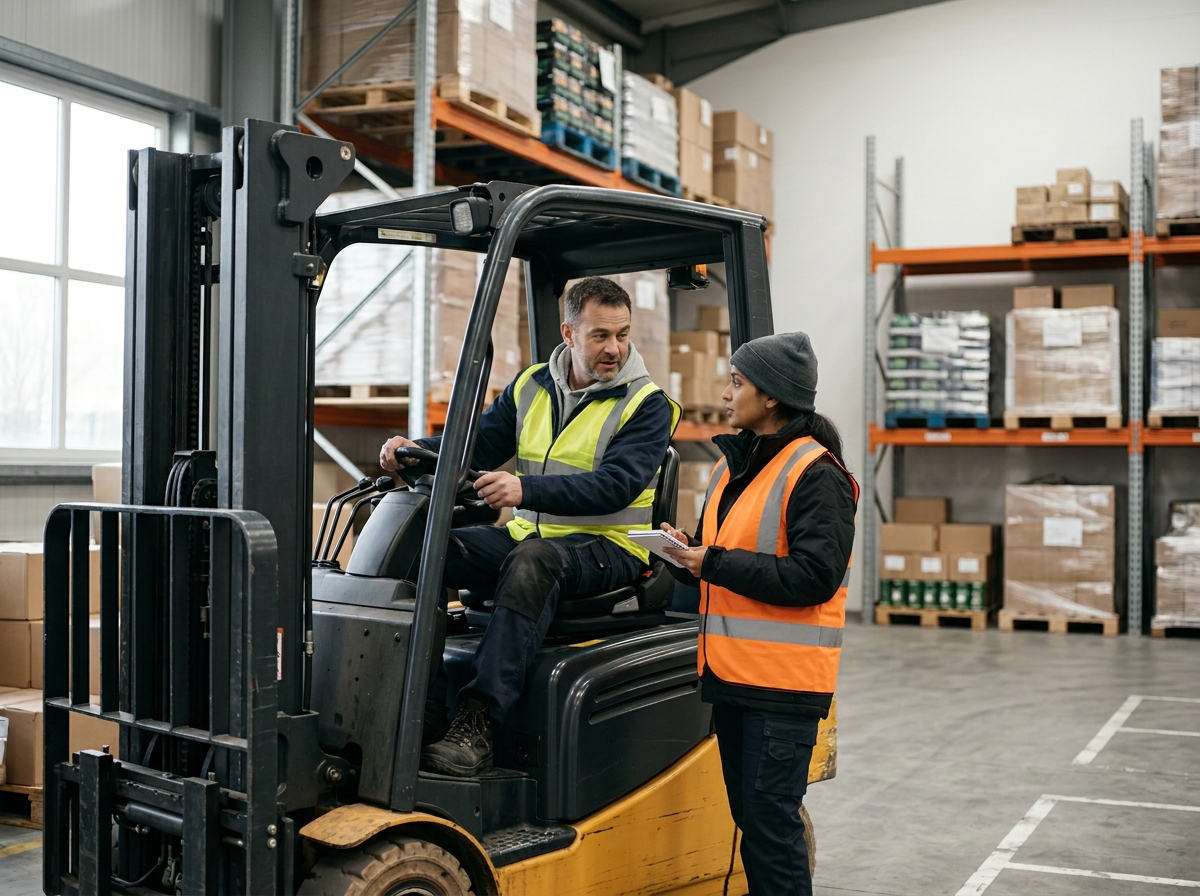
Where suitable, training is delivered at your workplace using your own equipment. Operators learn in the environment they work in every day, with the layouts, loads and conditions they actually encounter. That makes the training immediately relevant and allows newly developed skills to be applied straight back into the job.